
The Hidden Truth s’exprime sur « controlled male chastity »
Cette vidéo a été fraîchement publiée par The Hidden Truth sur YouTube
focalisé sur « controlled male chastity »:
[embedded content]
Cette vidéo était active en termes de visionnage à la date où nous l’avons remarquée. Le nombre de Likes indiquait: 0.
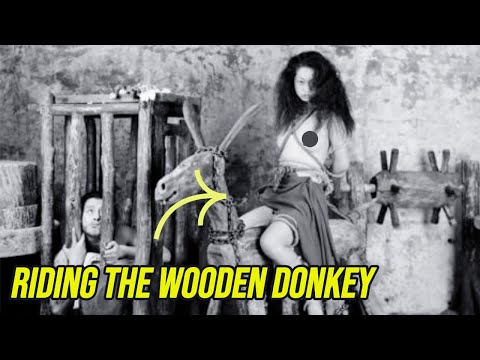
À noter, la durée de la vidéo est de 00:10:54 secondes et son titre est A brutal punishment in ancient China, and the Spanish Donkey in medieval Europe !, fournis par [vid_author_name]. La description se trouve ci-dessous :« Uncover the dark history of Riding the Wooden Donkey (mù lǖ [moo lyoo]), a brutal punishment in ancient China, and the Spanish Donkey in medieval Europe. This The Hidden Truth episode explores how these torturous practices enforced gender inequality under Confucian ideals, targeting women accused of moral crimes. Dive into similar ancient Chinese punishments like zǎnxíng [zan shing], gōngxíng [goong shing], cangue [kang], and Parading on Donkey, alongside global parallels in Persia and colonial America. Witness the courage of resistors like Chunyu Tiying, Hong Xuanjiao, and Qiu Jin, whose defiance fueled reforms, from the 1905 New Criminal Law to modern human rights efforts like Amnesty International’s End Solitary Now campaign. Join us to reflect on history’s lessons and humanity’s progress in this gripping journey through ancient punishments and the fight for justice.
🕒 Timestamps:
0:00 – Introduction: A Haunting Scene
1:04 – Europe: The Spanish Donkey
2:20 – China: Riding the Wooden Donkey
3:38 – Gender Inequality
5:04 – Similar Punishments
7:06 – Historical Mysteries
8:08 – Social Psychology
9:04 – From Cruelty to Progress
10:07 – Conclusion: Reflect Together
📢 What lessons can we learn from these punishments? How can campaigns like End Solitary Now shape justice today? Comment below! Subscribe to The Hidden Truth for more untold stories : https://www.youtube.com/channel/UCLUyKY4RD_ZkfsCxqineVAA?sub_confirmation=1
📢Like, share, and hit the bell for weekly history deep dives!
#RidingTheWoodenDonkey #AncientPunishments #GenderInequality #HumanRights #TheHiddenTruth #spanishdonkey ».
Grâce à sa vaste audience, YouTube permet aux utilisateurs d’explorer une multitude de thématiques tout en garantissant un espace où le respect des autres et l’anonymat sont préservés. C’est une plateforme qui facilite la découverte et le partage de vidéos qui engagent des discussions ouvertes et constructives autour des idées personnelles.
Appliquer la chasteté au jour le jour.
Il existe plusieurs stratégies pour les hommes désireux de suivre la voie de la chasteté. Pour saisir ses motivations et valeurs, il est crucial de commencer par une introspection. Il est recommandé d’éviter les circonstances qui pourraient éveiller des désirs incontrôlés, comme les contenus sexuels. Pour maintenir sa pratique de la chasteté, un mentor ou un groupe de soutien avec les mêmes convictions peut être précieux. Dans une société saturée par la sexualité, pratiquer la chasteté peut présenter des difficultés. Les obstacles incluent la pression sociale et les tentations récurrentes. Pour surmonter ces défis, il est important de maintenir une rigoureuse discipline personnelle. Il est important de ne pas se laisser abattre par un échec, mais de reprendre avec une détermination renouvelée. Atteindre la chasteté n’est pas une question de perfection mais de cheminement avec patience et persévérance. En conclusion, pratiquer la chasteté dans sa vie peut entraîner une liberté plus grande, une maîtrise de soi améliorée, et une profonde réalisation spirituelle. Bien qu’elle puisse sembler restrictive dans un monde où la sexualité est souvent plus valorisée que la spiritualité, la chasteté offre une voie vers une vie plus authentique, fidèle à ses valeurs et sa foi.
La chasteté a un effet profond sur le bien-être personnel et moral. Une analyse de l’impact de la chasteté sur le bien-être personnel et moral est importante.
La chasteté pratiquée avec attention a une influence majeure sur le bien-être personnel. Elle favorise une meilleure maîtrise de soi, une plus grande clarté mentale et une paix intérieure issue du respect des convictions morales. Cette pratique conduit à une relation plus harmonieuse entre l’homme, son corps et ses désirs. La liberté obtenue par la chasteté vient de la libération des pulsions et des pressions sociales associées à la sexualité. La chasteté apporte une pureté morale qui fortifie la dignité et l’estime de soi. La chasteté a des effets notables sur le bien-être psychologique. La chasteté aide les individus à développer une confiance en soi renforcée et une meilleure résilience face aux défis.
La chasteté et la spiritualité sont intimement liées dans de nombreuses traditions.
Dans de nombreuses religions, la chasteté est liée à la dimension spirituelle. La chasteté est perçue comme un chemin vers la sanctification dans plusieurs traditions religieuses. En disciplinant ses désirs sexuels, on favorise un meilleur bien-être personnel. La chasteté est vue comme un acte de respect divin et une offrande de soi. Dans ce contexte, la chasteté est vue comme un choix pour élever l’âme plutôt qu’une simple privation. Les différentes religions ont des perspectives variées sur la chasteté. Dans le catholicisme, la chasteté est vue comme une vertu cruciale pour les prêtres. L’islam valorise la chasteté en établissant des règles rigoureuses pour réguler la sexualité. La chasteté est couramment observée par les ascètes dans l’hindouisme et le bouddhisme pour rechercher l’illumination. Ainsi, la chasteté unifie les croyants dans une quête spirituelle partagée.
Explorer la chasteté à travers une perspective contemporaine. Définir la chasteté avec une approche contemporaine.
Au fond, la chasteté est la capacité à gérer ses pulsions sexuelles. Ce n’est pas seulement l’abstinence, mais un contrôle délibéré des désirs sexuels dans un contexte moral ou spirituel. La chasteté dans le monde moderne est davantage une question d’orienter les désirs vers des buts plus élevés comme le respect de soi et des autres. Dans le monde moderne, être chaste ne veut pas dire se priver du plaisir, mais plutôt vivre sa sexualité en faisant des choix conscients.
La chasteté : Une vertu à reconsidérer pour l’homme moderne.
La chasteté est une vertu qui semble taboue dans notre monde actuel. Pour les personnes qui intègrent la chasteté dans leur vie, elle offre une route vers une paix intérieure plus grande, des relations améliorées et une connexion spirituelle plus profonde. Dans les temps anciens, la chasteté était plus souvent reconnue et discutée. La problématique de la chasteté est longuement développéesur le site chastete.fr qui traite de la chasteté. Cet article examine la chasteté sous divers angles, en offrant aux hommes des clés pour comprendre et appliquer cette vertu dans leur quotidien.
FAQ : Tout ce que vous devez savoir sur la Chasteté.
Est-ce que la chasteté est réservée aux religieux uniquement ? Non, la chasteté n’est pas réservée aux seuls religieux, elle peut être pratiquée par des individus de tous horizons. Quelle est la dissemblance entre chasteté et abstinence ? L’abstinence est un choix de ne pas s’engager dans des activités sexuelles. La chasteté, en revanche, peut inclure des dispositifs comme des ceintures ou cages et s’inscrit dans une démarche de progrès personnel semblable à celle d’un sportif. Quelle est la nature de la chasteté dans les relations de couple marié ? Dans le mariage, la chasteté implique souvent une collaboration et une communication entre les époux sur la pratique et les objectifs. Pourquoi l’Église accorde-t-elle une telle importance à la chasteté ? La chasteté est jugée par l’Église comme une vertu primordiale pour vivre selon les principes de la foi chrétienne. Comment la pratique de la chasteté aide-t-elle à l’épanouissement personnel ? La chasteté favorise l’épanouissement personnel en offrant un meilleur contrôle de soi, une clarté mentale accrue et une paix intérieure.
Examiner comment la chasteté influence les relations avec les autres et les dynamiques familiales.
La pratique de la chasteté influence aussi favorablement les relations avec autrui. Une cage de chasteté permet à un homme de raviver ses capacités de séduction et de modifier son comportement avec ses partenaires. Durant l’acte, les capacités physiques et sexuelles de l’individu deviennent plus puissantes puisqu’elles sont sollicitées moins souvent. Il est possible de pratiquer la chasteté en toute discrétion, sans nécessairement dévoiler le secret à ses partenaires. La chasteté, dans le contexte du mariage, peut solidifier les liens conjugaux en encourageant un amour plus profond, détaché du plaisir charnel.
Comprendre les origines historiques et culturelles de la chasteté.
Les traditions religieuses et culturelles valorisent profondément la chasteté. En christianisme, la chasteté est souvent liée au vœu de continence fait par les prêtres et les religieux. Dans l’islam, ainsi que dans les Églises catholique et orthodoxe, la chasteté est considérée comme une vertu essentielle, tant pour les religieux que pour les laïcs, surtout avant le mariage. En Antiquité, la chasteté était considérée comme essentielle pour conserver l’intégrité personnelle et la pureté morale. De ce fait, la chasteté surpasse les âges et les cultures, continuant à être une vertu admirée et respectée.
Voici le lien pour voir la vidéo sur YouTube :
le post original: Cliquer ici
#brutal #punishment #ancient #China #Spanish #Donkey #medieval #Europe
Retranscription des paroles de la vidéo: hello dear viewers welcome to the Hidden Truth where we unearth the past to light the future today we plunge into a chilling chapter of history the punishment known as riding the wooden donkey picture of 15th century European square torch smoke curling through frosty air a crowd murmurs staring at a woman bound to a wooden frame shaped like a donkey its timbers groaning under her struggle the instruments of torture by Michael Carrigan exposes cruelty veiled as justice in this scene a truth we must confront known as the Spanish donkey in Europe and Mu Liu in China this punishment etched scars on humanity’s story join me to uncover its origins its impact and the lessons it holds for today grab a cup of tea settle in and let’s reveal the truth together in Europe the Spanish donkey was a brutal torture device first recorded during the 12th century Spanish Inquisition as a history of torture by George Riley Scott documents a triangular wooden frame with a razor sharp edge sat atop four legs like a cruel throne victims often women accused of witchcraft or heresy but also men defying military orders were forced to straddle this jagged ridge their body weight crushed their groin and pelvis tearing flesh and sometimes shattering bones Jesuit records from 1646 Canada note iron weights tied to victim’s legs amplifying the torment one account describes a woman enduring until her organs failed a stark testament to the era’s inhumanity in the American Civil War dubbed Morgan’s Mule it disciplined deserters military logs recount soldier William Patton suffering hours on its edge in 1863 his injuries lifelong these records reveal a grim reality punishment often served power not fairness in ancient China riding the wooden donkey or mulu muo Liu was even more savage Ming and Qing records cited in punishments of China by George Henry Mason confirm its use against women accused of adultery or murdering their husbands the device was a wooden donkey with a 30 centimeter sharp stake on its back victims were forced to sit the stake piercing their bodies inflicting catastrophic internal damage some versions Ming texts describe had eccentric wheels causing the stake to shift as the cart rolled through jeering crowds bound tightly sometimes with feet nailed victims faced public scorn in Water Margin Pan Jinlian’s fictional fate for infidelity mirrors countless real women’s suffering exaggerated tales of stakes piercing mouths found in Di Gong An are unverified but the pain and shame were undeniable this punishment’s focus on women exposes a profound injustice rooted in a society that demanded female chastity while sparing men it remains a haunting symbol of gendered brutality riding the wooden donkey was more than torture it was a weapon to subjugate women in feudal China confusion ideals as unruly women in Chinese popular prints by Huang Hua explains cast women as guardians of family honor punishing Defiance with ruthless precision a woman’s body became a canvas for societal control her dignity sacrificed to patriarchal order yet resistance shone through in the Western Han Dynasty Chunyu Tiying’s bold petition to abolish the Five punishments she shaped China’s penal code a triumph of courage in 1860 Taiping Heavenly Kingdoms Hong Shuangjiao sister of leader Hong Shuquan rallied thousands of women against Qing oppression undeterred by the Mu Lu’s threat Qing records affirm by the late Qing women’s reading clubs inspired by poet revolutionary Chu Jin spread feminist ideas building on Taiping Defiance to challenge gendered oppression these women victims and visionaries forged a path to Equality their legacy a beacon of hope their stories weave a dual narrative the crushing weight of injustice and the unyielding spirit that reshaped history picture a Ming woman trembling as she faces the Mu Lu’s piercing stake or enduring Zhang Xing’s crushing sticks her spirit tested by a system bent on control riding the wooden donkey was one of many punishments in ancient China designed to enforce obedience through pain and shame especially against women one horrific method noted in Ming records struck a woman’s abdomen to dislodge her uterus destroying her fertility and branding her unfit in a society revering motherhood Zhang Sing Zhang Sing crushed fingers with sticks leaving women like a 17th century Nanjing seamstress unable to work her life broken as a warning Yin excavation Yin excavation per Qing archives used tools to destroy reproductive organs ensuring no future lineage for the gravest offenses the Kang Wei kang a heavy wooden collar locked victims in public humiliation in 1710 Beijing a woman wore the Kong Wei for weeks in a bustling market her shame a community lesson Gongxing Gongxing confined adulterous women in dark cells in 1650 Suzhou 1 endured six months in a windowless chamber her isolation a stark chastity lesson by the Song Dynasty parading on donkey shamed offenders on real donkeys likely inspiring the lethal mulu by the Ming era texts suggest in 10th century Persia an adulterer was paraded through Isfahan’s bazaar her shame mirroring China’s practice Colonial America’s riding the rail echoed the Spanish donkey’s design these punishments formed a chilling system using women’s bodies to uphold confusion hierarchy a legacy urging us to champion compassion today the origins of riding the wooden donkey remain veiled in mystery Ming and Qing records confirm its use but claims of Han or song roots possibly from Ming texts like Yongla Dadian backdating practices for legitimacy lack artifacts or primary texts as Chinese Justice by Li Chen notes tales of official Shu Shi lun as its creator seem embellished crafted to burnish his fame the Spanish donkeys beginnings are equally elusive predating the 12th century Inquisition but undocumented earlier novels like Di Gong an spun terms like Xiao bian for mulu blending fact and fiction a reminder that history often dances with myth with wooden devices long decayed we rely on texts and imagination a challenge the hidden truth embraces to separate truth from tale why did crowds revel in such brutality Gustave Le Bon’s The Psychology of crowds reveals mobs surrender reason to collective frenzy in 1860 North China Herald recounts crowds pelting typing prisoners on the Mulu their shouts drowning out cries in Europe Witch Hunts in Europe describes onlookers torn between awe and fear yet some shed silent tears their compassion a spark of humanity did these spectacles succeed Historian Edward Peters argues public torture bolstered state power not deterrence Qing accounts show Taiping rebels far from subdued fought fiercer after such cruelties in 1860 proving fear can fuel Defiance these displays meant to control often ignited rebellion instead in 1905 reformer Shen Jia Bing’s new Criminal Law banished the mu Lu as inhumane history reveals in Europe Cesare Beccaria’s 1764 on crimes and punishments dismantled the Spanish donkey championing humane justice these milestones marked a shift toward compassion Today Amnesty International’s End Solitary now campaign fights US prison isolation echoing the Moo lose lesson justice must heal not harm the 1949 Geneva Convention reinforces this ensuring such inhumanity remains history yet debates over harsh sentences remind us to stay vigilant at Amsterdam’s Torture Museum a Spanish donkey replica evokes past horrors but also pride in humanity’s progress justice we learn must uplift not destroy dear viewers thank you for joining this profound journey the mule or Spanish donkey story is more than history it’s a call to cherish dignity and justice from its brutalities we’ve built a world valuing human rights a legacy we must nurture how can campaigns like end solitary now shape fairer justice what human rights story should the Hidden Truth explore next share your ideas below like share and subscribe to join our quest at the Hidden Truth we unearth the past to light the future true justice lifts the human spirit not breaks it see you soon and wishing you a warm meaningful evening .
Déroulement de la vidéo:
3.5 hello dear viewers
3.5 welcome to the Hidden Truth
3.5 where we unearth the past to light the future
3.5 today we plunge into a chilling chapter of history
3.5 the punishment known as riding the wooden donkey
3.5 picture of 15th century European square
3.5 torch smoke curling through frosty air
3.5 a crowd murmurs staring at a woman
3.5 bound to a wooden frame shaped like a donkey
3.5 its timbers groaning under her struggle
3.5 the instruments of torture by Michael Carrigan
3.5 exposes cruelty veiled as justice
3.5 in this scene a truth we must confront
3.5 known as the Spanish donkey in Europe
3.5 and Mu Liu in China
3.5 this punishment etched scars on humanity&;s story
3.5 join me to uncover its origins
3.5 its impact and the lessons it holds for today
3.5 grab a cup of tea
3.5 settle in and let&;s reveal the truth together
3.5 in Europe
3.5 the Spanish donkey was a brutal torture device
3.5 first recorded during the 12th century
3.5 Spanish Inquisition
3.5 as a history of torture by George Riley Scott documents
3.5 a triangular wooden frame with a razor sharp edge
3.5 sat atop four legs like a cruel throne
3.5 victims often women accused of witchcraft or heresy
3.5 but also men defying military orders
3.5 were forced to straddle this jagged ridge
3.5 their body weight crushed their groin and pelvis
3.5 tearing flesh and sometimes shattering bones
3.5 Jesuit records from 1646
3.5 Canada note iron weights tied to victim&;s legs
3.5 amplifying the torment
3.5 one account describes a woman enduring
3.5 until her organs failed
3.5 a stark testament to the era&;s inhumanity
3.5 in the American Civil War dubbed Morgan&;s Mule
3.5 it disciplined deserters
3.5 military logs recount soldier William Patton
3.5 suffering hours on its edge in 1863
3.5 his injuries lifelong
3.5 these records reveal a grim reality
3.5 punishment often served power not fairness
3.5 in ancient China riding the wooden donkey
3.5 or mulu muo Liu was even more savage
3.5 Ming and Qing records
3.5 cited in punishments of China by George Henry Mason
3.5 confirm its use against women
3.5 accused of adultery or murdering their husbands
3.5 the device was a wooden donkey
3.5 with a 30 centimeter sharp stake on its back
3.5 victims were forced to sit
3.5 the stake piercing their bodies
3.5 inflicting catastrophic internal damage
3.5 some versions Ming texts describe had eccentric wheels
3.5 causing the stake to shift
3.5 as the cart rolled through jeering crowds
3.5 bound tightly sometimes with feet nailed
3.5 victims faced public scorn in Water
3.5 Margin Pan Jinlian&;s fictional fate for infidelity
3.5 mirrors countless real women&;s suffering
3.5 exaggerated tales of stakes piercing mouths
3.5 found in Di Gong An are unverified
3.5 but the pain and shame were undeniable
3.5 this punishment&;s focus on women
3.5 exposes a profound injustice
3.5 rooted in a society that demanded female chastity
3.5 while sparing men
3.5 it remains a haunting symbol of gendered brutality
3.5 riding the wooden donkey was more than torture
3.5 it was a weapon to subjugate women
3.5 in feudal China
3.5 confusion ideals as unruly women in Chinese
3.5 popular prints by Huang Hua explains
3.5 cast women as guardians of family honor
3.5 punishing Defiance with ruthless precision
3.5 a woman&;s body became a canvas for societal control
3.5 her dignity sacrificed to patriarchal order
3.5 yet resistance shone through in the Western Han Dynasty
3.5 Chunyu Tiying&;s bold petition
3.5 to abolish the Five punishments
3.5 she shaped China&;s penal code
3.5 a triumph of courage in 1860
3.5 Taiping Heavenly Kingdoms
3.5 Hong Shuangjiao sister of leader Hong Shuquan
3.5 rallied thousands of women against Qing oppression
3.5 undeterred by the Mu Lu&;s threat
3.5 Qing records affirm by the late Qing
3.5 women&;s reading clubs
3.5 inspired by poet revolutionary Chu Jin
3.5 spread feminist ideas building on Taiping Defiance
3.5 to challenge gendered oppression
3.5 these women
3.5 victims and visionaries forged a path to Equality
3.5 their legacy a beacon of hope
3.5 their stories weave a dual narrative
3.5 the crushing weight of injustice
3.5 and the unyielding spirit that reshaped history
3.5 picture a Ming woman
3.5 trembling as she faces the Mu Lu&;s piercing stake
3.5 or enduring Zhang Xing&;s crushing sticks
3.5 her spirit tested by a system bent on control
3.5 riding the wooden donkey
3.5 was one of many punishments in ancient China
3.5 designed to enforce obedience through pain and shame
3.5 especially against women
3.5 one horrific method noted in Ming records
3.5 struck a woman&;s abdomen to dislodge her uterus
3.5 destroying her fertility
3.5 and branding her unfit in a society
3.5 revering motherhood Zhang Sing
3.5 Zhang Sing crushed fingers with sticks
3.5 leaving women like a 17th century Nanjing seamstress
3.5 unable to work her life broken
3.5 as a warning
3.5 Yin excavation Yin excavation
3.5 per Qing archives
3.5 used tools to destroy reproductive organs
3.5 ensuring no future lineage for the gravest offenses
3.5 the Kang Wei kang a heavy wooden collar
3.5 locked victims in public humiliation
3.5 in 1710 Beijing a woman wore the Kong Wei
3.5 for weeks in a bustling market
3.5 her shame a community lesson
3.5 Gongxing
3.5 Gongxing confined adulterous women in dark cells
3.5 in 1650 Suzhou
3.5 1 endured six months in a windowless chamber
3.5 her isolation
3.5 a stark chastity lesson by the Song Dynasty
3.5 parading on donkey shamed offenders on real donkeys
3.5 likely inspiring the lethal mulu by the Ming era
3.5 texts suggest in 10th century Persia
3.5 an adulterer was paraded through Isfahan&;s bazaar
3.5 her shame mirroring China&;s practice
3.5 Colonial America&;s riding the rail
3.5 echoed the Spanish donkey&;s design
3.5 these punishments formed a chilling system
3.5 using women&;s bodies to uphold confusion hierarchy
3.5 a legacy urging us to champion compassion today
3.5 the origins of riding the wooden donkey
3.5 remain veiled in mystery
3.5 Ming and Qing records confirm its use
3.5 but claims of Han or song roots
3.5 possibly from Ming texts like Yongla Dadian
3.5 backdating practices for legitimacy
3.5 lack artifacts or primary texts
3.5 as Chinese Justice by Li Chen notes
3.5 tales of official Shu Shi lun as its creator
3.5 seem embellished crafted to burnish his fame
3.5 the Spanish donkeys beginnings are equally elusive
3.5 predating the 12th century Inquisition
3.5 but undocumented earlier novels like Di Gong an
3.5 spun terms like Xiao bian for mulu
3.5 blending fact and fiction
3.5 a reminder that history often dances with myth
3.5 with wooden devices long decayed
3.5 we rely on texts and imagination
3.5 a challenge the hidden truth embraces
3.5 to separate truth from tale
3.5 why did crowds revel in such brutality
3.5 Gustave Le Bon&;s The Psychology of crowds
3.5 reveals mobs surrender reason to collective frenzy
3.5 in 1860 North China Herald recounts
3.5 crowds pelting typing prisoners on the Mulu
3.5 their shouts drowning out cries in Europe
3.5 Witch Hunts in Europe
3.5 describes onlookers torn between awe and fear
3.5 yet some shed silent tears
3.5 their compassion a spark of humanity
3.5 did these spectacles succeed
3.5 Historian Edward Peters argues
3.5 public torture bolstered state power
3.5 not deterrence Qing accounts show Taiping rebels
3.5 far from subdued
3.5 fought fiercer after such cruelties in 1860
3.5 proving fear can fuel Defiance
3.5 these displays meant to control
3.5 often ignited rebellion instead
3.5 in 1905 reformer Shen Jia Bing&;s new Criminal Law
3.5 banished the mu Lu
3.5 as inhumane history reveals in Europe
3.5 Cesare Beccaria&;s 1764 on crimes and punishments
3.5 dismantled the Spanish donkey
3.5 championing humane justice
3.5 these milestones marked a shift toward compassion
3.5 Today Amnesty International&;s End Solitary now campaign
3.5 fights US prison isolation
3.5 echoing the Moo lose lesson
3.5 justice must heal not harm
3.5 the 1949 Geneva Convention reinforces this
3.5 ensuring such inhumanity remains history
3.5 yet debates over harsh sentences
3.5 remind us to stay vigilant
3.5 at Amsterdam&;s Torture Museum
3.5 a Spanish donkey replica evokes past horrors
3.5 but also pride in humanity&;s progress
3.5 justice we learn
3.5 must uplift not destroy
3.5 dear viewers
3.5 thank you for joining this profound journey
3.5 the mule or Spanish donkey story is more than history
3.5 it&;s a call to cherish dignity and justice
3.5 from its brutalities
3.5 we&;ve built a world valuing human rights
3.5 a legacy we must nurture
3.5 how can campaigns like end solitary now
3.5 shape fairer justice
3.5 what human rights story should the Hidden Truth explore
3.5 next share your ideas below
3.5 like share
3.5 and subscribe to join our quest at the Hidden Truth
3.5 we unearth the past to light the future
3.5 true justice lifts the human spirit
3.5 not breaks it see you soon and wishing you a warm
3.5 meaningful evening
.
Cet article, qui traite du thème “information chasteté”, vous est spécialement suggéré par blog.chaste-t.com. La chronique est reproduite du mieux possible. Dans le cas où vous souhaitez apporter quelques précisions concernant le domaine de “information chasteté” vous pouvez solliciter notre rédaction. La destination de blog.chaste-t.com est de débattre de information chasteté dans la transparence en vous apportant la connaissance de tout ce qui est en lien avec ce sujet sur la toile Connectez-vous sur notre site blog.chaste-t.com et nos réseaux sociaux dans le but d’être informé des futures publications.